Sleep Among Giants: A Hidden Redwood Cabin in Northern California
There’s a moment when you enter the redwoods where the world quietly recalibrates.
The road narrows. The light softens. Sound seems to disappear into layers of bark and moss. And then suddenly, you’re no longer looking at trees — you’re standing among giants.
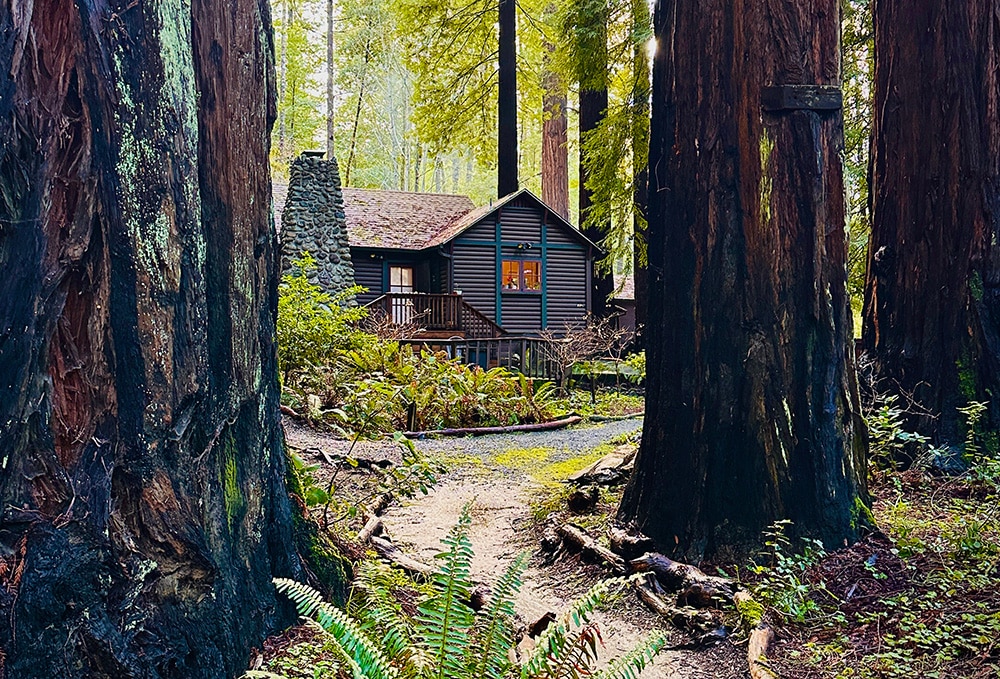
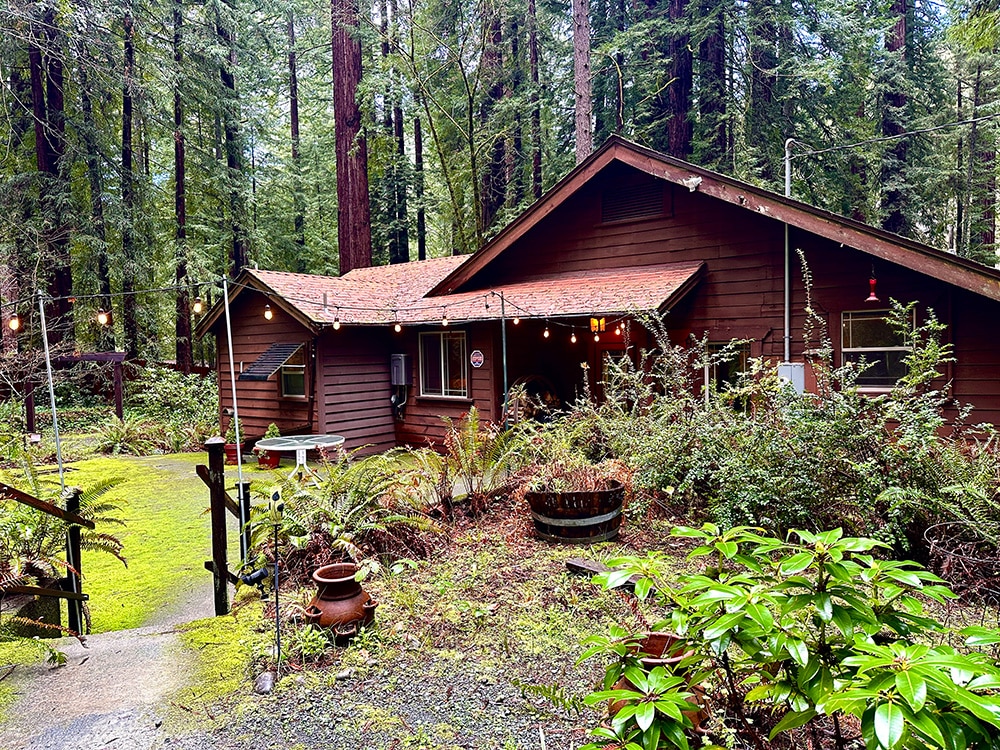
My friend and I arrived in Redway on a cool spring afternoon, misty rain falling in that steady rhythm that feels less like weather and more like atmosphere. Just minutes from the Avenue of the Giants, our destination was a secluded Craftsman-style redwood cabin in Northern California, tucked beneath towering redwoods, some rising more than 250 feet overhead.
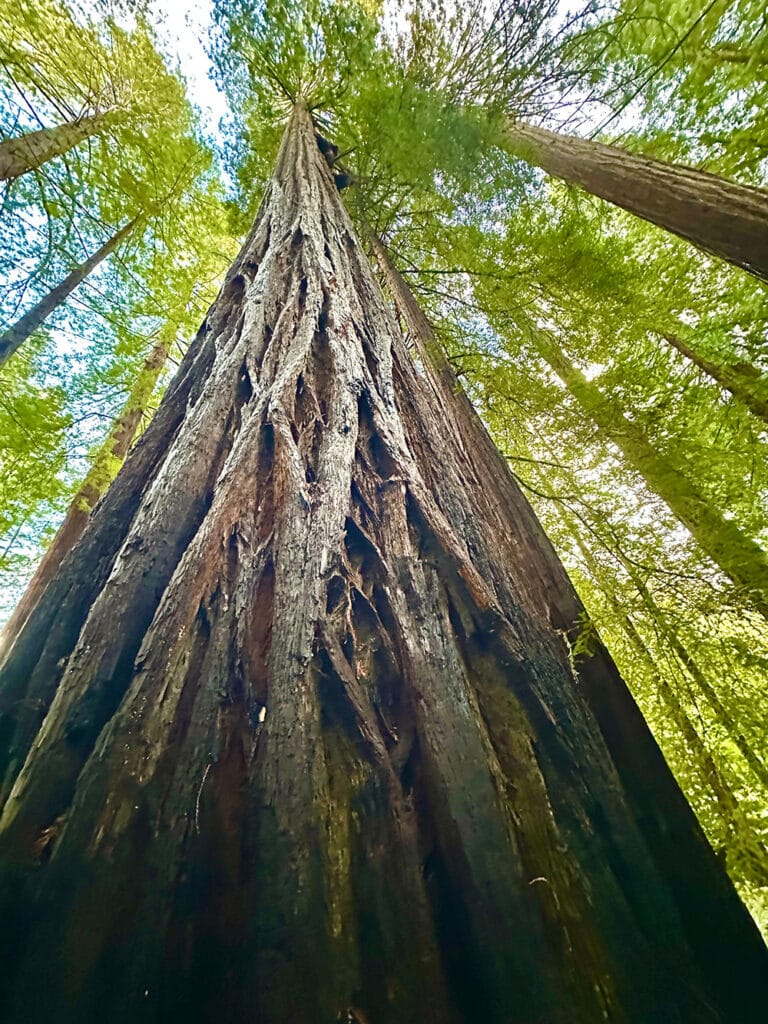
Before we even unpacked, we stood silently in the driveway looking up, trying — and failing — to see the tops.
You don’t simply observe redwoods. You feel dwarfed by them.
A Cabin Designed by the Forest
The cabin sits quietly near the Eel River, surrounded by towering trunks that filter rain into a soft mist. Inside, warm wood tones echo the forest outside, making it feel less like a rental and more like a natural extension of the landscape.
There’s no dramatic entrance or flashy reveal here. Instead, the magic unfolds slowly — the scent of damp earth drifting through open windows, the sound of water moving somewhere nearby, the way the forest absorbs urgency.
It’s the kind of place that immediately encourages you to slow down.
Our host, Samantha, greeted us with the calm energy of someone deeply connected to her home. A forest bathing guide, Reiki practitioner, massage therapist, and entrepreneur, she wears many hats — but stewardship of this land might be the most meaningful one.
Buying a Forest to Save It
As we walked through her redwood grove, Samantha explained something surprising: many of the trees on the property had previously been “tagged” under harvest planning — meaning they were marked as potential logging assets.
In timber regions, mature redwoods can add enormous financial value to land because the lumber can be worth millions. Yet the towering trees here — some hundreds or even thousands of years old — are healthy, thriving ecosystems, not dying forests in need of removal.
They bought the property specifically to preserve them.
Standing beneath those massive trunks, it was impossible not to feel the weight of that decision. These trees exist today not just because of historic conservation efforts, but because individuals are still choosing protection over profit.
Following the Avenue of the Giants
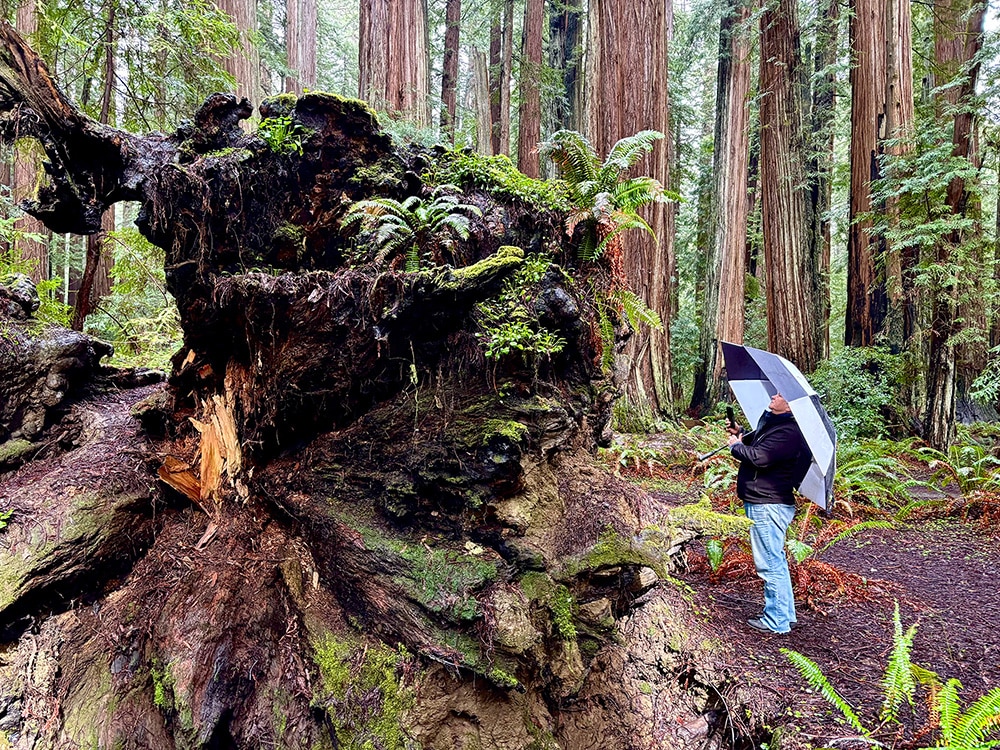
The next morning, we drove stretches of the Avenue of the Giants, a winding 31-mile route through some of the most awe-inspiring old-growth redwoods in the country.
Rain fell lightly as we stopped at quiet groves, stepping onto soft trails where the air smelled intensely green — part earth, part rain, part something ancient and impossible to name.
It’s easy to forget that these forests were nearly lost. In the early 1900s, widespread logging threatened much of Northern California’s old-growth redwoods before concerned citizens rallied to preserve what would become Humboldt Redwoods State Park.
Every visitor walking these trails today is experiencing the result of that collective effort.
Life Along the Eel River
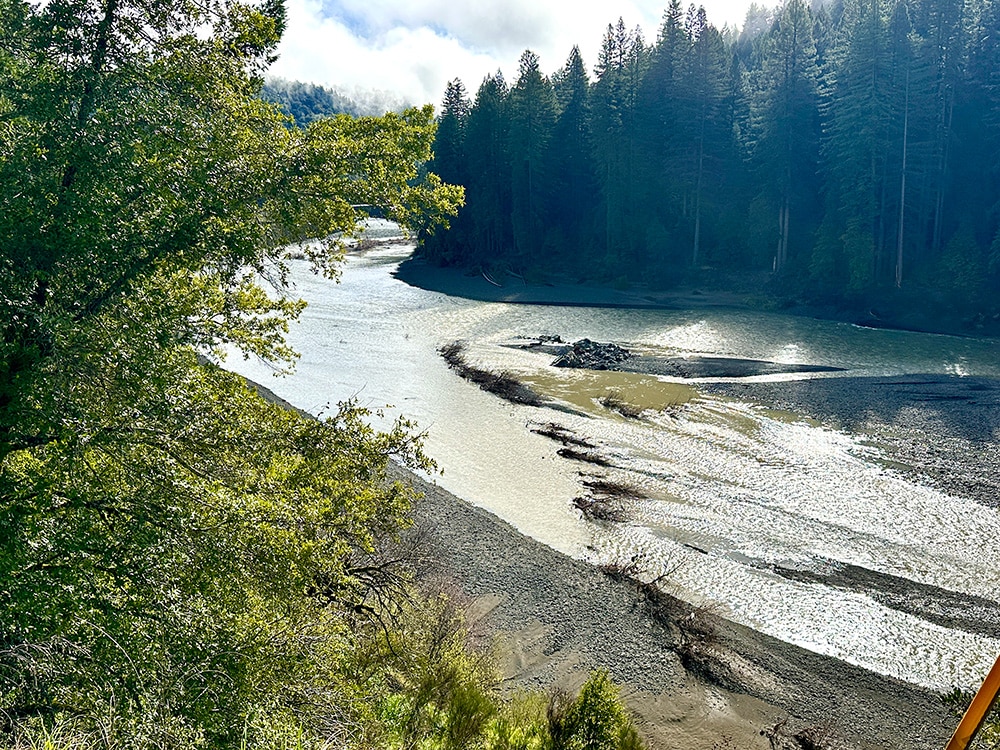
Back at the cabin, the nearby Eel River added another dimension to the experience. Samantha told us that local fishermen often call her to ask whether the river has turned “butterfly green” — the moment when sediment settles, and the water clears to an almost luminous color, signaling ideal conditions for drifting downstream in search of coho salmon.
The river corridor feels alive in every direction. River otters move along the banks, chorus frogs call at dusk, and mink occasionally slip through the underbrush. Lampreys — ancient eel-like fish older than the redwoods themselves — still inhabit these waters.
And yes, locals will occasionally mention the possibility of a Bigfoot sighting with just enough seriousness to make you glance twice into the trees.
Samantha is even developing plans for a future kayak-to-camp experience along the river, inspired by hut-to-hut hiking routes. This slow-travel approach would allow visitors to move through the landscape with minimal impact.
Why Places Like This Matter
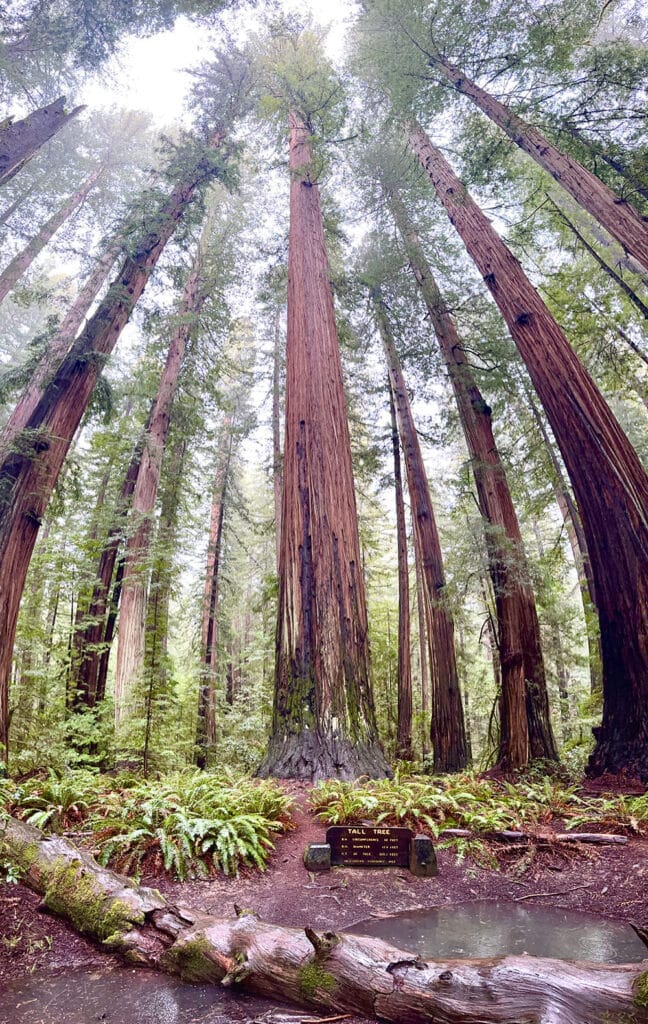
Standing beneath a 250-foot redwood changes your sense of proportion.
Problems feel smaller. Time stretches. Conversations slow.
By our second morning, coffee in hand as fog drifted between trunks outside the cabin, I realized how rare it is to feel truly unhurried while traveling.
The redwoods operate on a timeline far beyond our own. Some were already centuries old before California became a state. They survived logging threats because people chose preservation. And today, places like this cabin allow travelers to experience that legacy firsthand — not from a scenic overlook, but from within the forest itself.
When we packed up to leave, the rain had lifted just enough for sunlight to filter through the canopy in thin golden beams. I took one last look upward, trying again to find the top of a tree that seemed to disappear into the sky.
I couldn’t.
And somehow, that felt like the point.
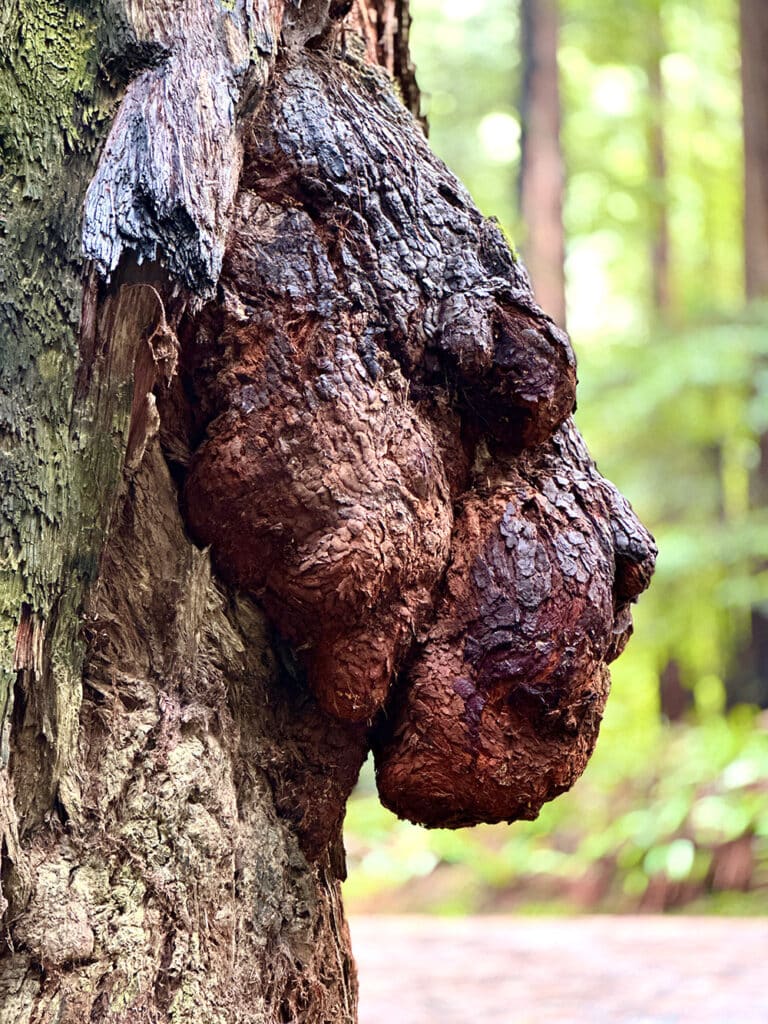
More Things To Do Near Your Redwood Cabin
Staying among the redwoods isn’t just about slowing down—it’s also a perfect base for exploring one of the most ecologically rich and quietly fascinating regions in Northern California.
Here are a few experiences that deepen the trip beyond the cabin itself.
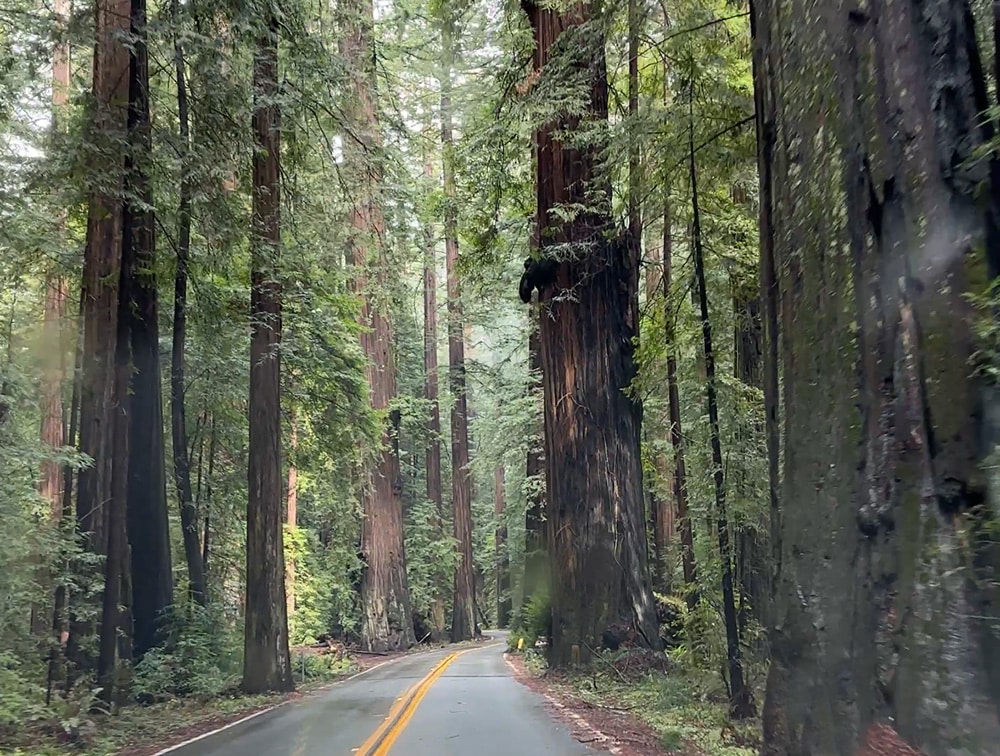
Drive the Avenue of the Giants
Just minutes from Redway, the Avenue of the Giants is one of the most iconic scenic drives in California—and somehow still feels under-the-radar compared to places like Yosemite or Big Sur.
This 31-mile stretch winds directly through Humboldt Redwoods State Park, offering access to some of the tallest and oldest trees on earth.
But what makes it special isn’t just the size—it’s the intimacy.
You’re not looking at the forest from afar. You’re inside it.
Pull over often. Walk the short trails. Step into the groves where the air feels cooler, quieter, almost cathedral-like. The light filters through in soft green layers, and the forest floor absorbs sound, making everything feel hushed and intentional.
It’s the kind of place where even a five-minute stop can turn into an hour.
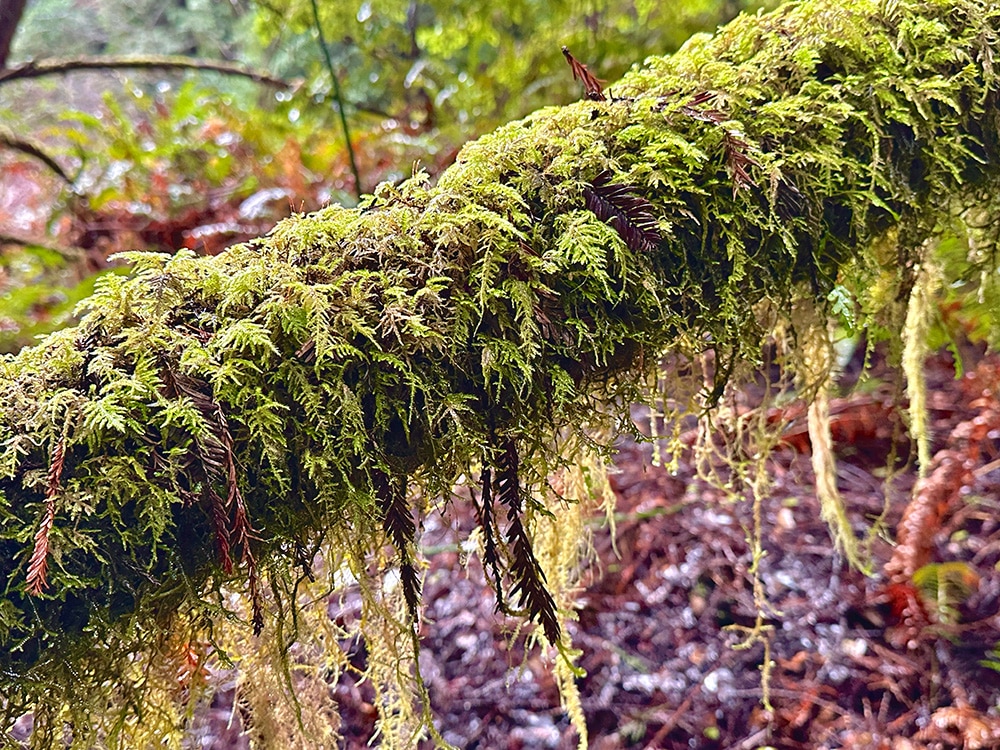
Forest Bathing in Rockefeller Grove
If you’re curious about forest bathing—or simply want to experience the redwoods more intentionally—Rockefeller Grove is one of the best places to do it.
This grove is home to some of the park’s largest old-growth redwoods, and it carries a different kind of energy—quieter, heavier, more grounded.
Forest bathing here isn’t about covering distance or checking off a viewpoint. It’s about slowing your pace enough to notice the textures of bark and moss, to listen to the subtle movement of the forest, and to let yourself fully arrive. Even standing still for a few minutes, you begin to feel how the redwoods shift your nervous system.
It’s not just peaceful—it’s recalibrating.
The Eel River: Wild, Scenic, and Alive
The Eel River is one of California’s designated Wild and Scenic Rivers, and once you see it up close, that designation makes complete sense.
It winds through redwood forests and open valleys, shifting colors depending on the season—from deep green to that almost glowing “butterfly green” locals talk about when conditions are just right. The river feels untamed, not overly managed or polished, but alive in a way that’s increasingly rare.
In warmer months, you’ll find quiet swimming holes and wide gravel bars perfect for picnics, while longer stretches of riverbank remain undisturbed, allowing wildlife to move freely through the corridor.
If you’re traveling by RV—or dreaming about it—there’s also a fantastic campground right along the river: Giant Redwoods RV & Campground in Myers Flat.
It’s one of those rare places where you can park steps from the water, fall asleep to the sound of the river, and wake up surrounded by towering trees.
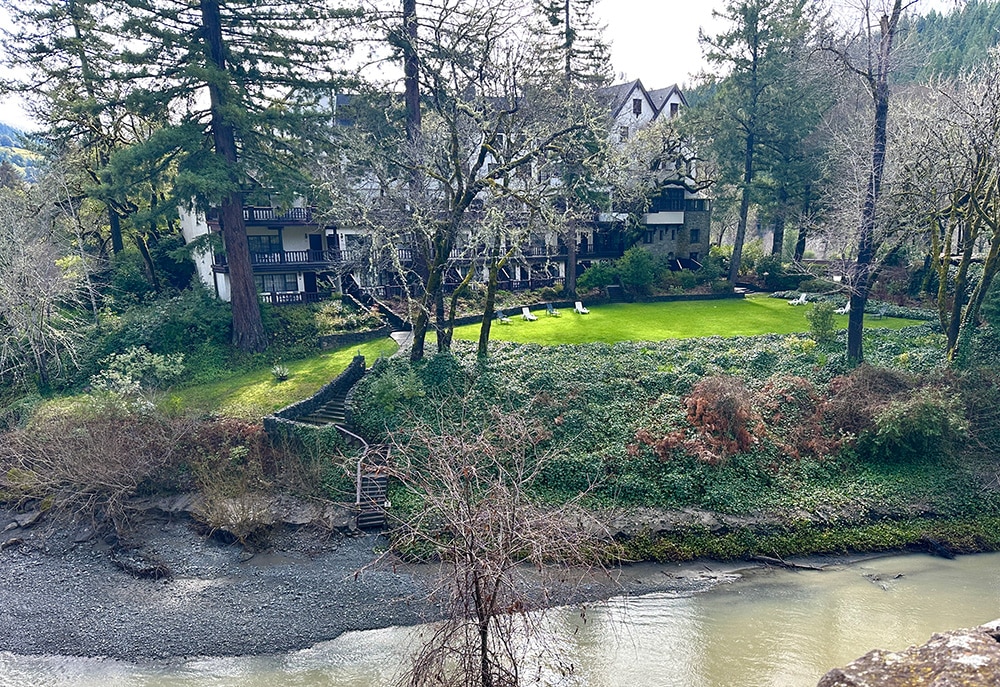
Step Back in Time in Garberville & Benbow
A short drive from Redway brings you into Garberville, a small historic town that still carries the layered character of old Northern California—part logging history, part counterculture, part laid-back river town.
Just outside of town sits one of the region’s most iconic landmarks: the Benbow Inn.
Built in 1926, this historic hotel feels like stepping into another era, with wide porches, rich wood-paneled interiors, and sweeping views over the Eel River valley. Even if you’re not staying overnight, it’s worth stopping in for a drink, a meal, or simply to wander the grounds and take in the atmosphere of a place that has been welcoming travelers for nearly a century.
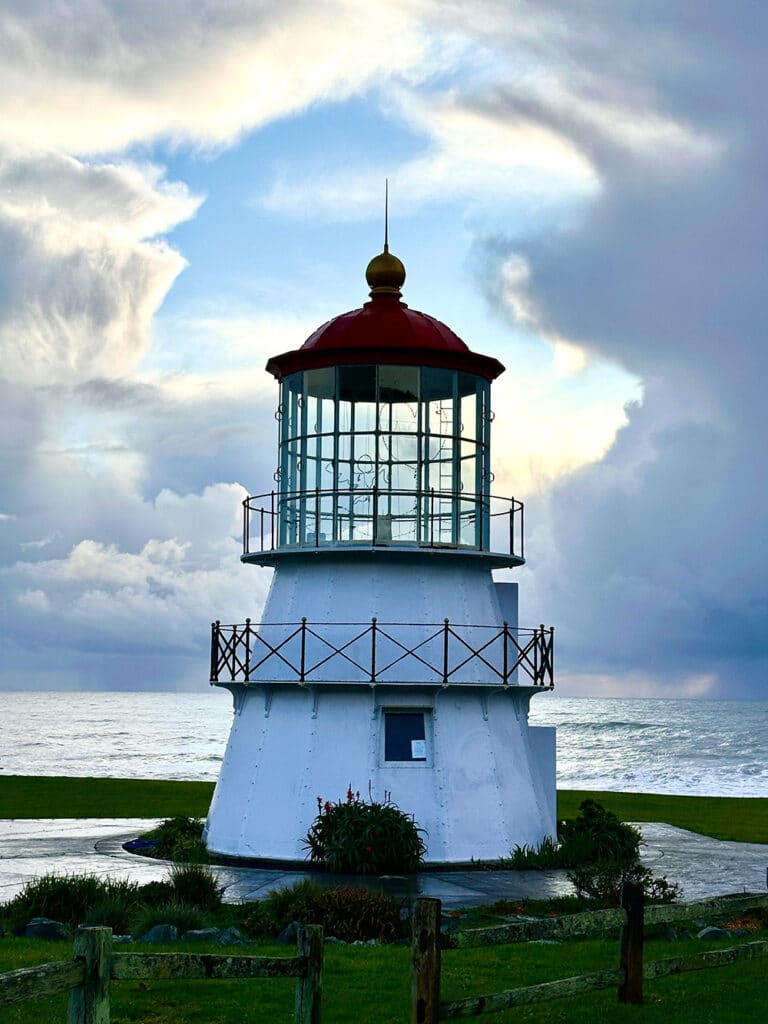
Drive to the Lost Coast: Shelter Cove
If you have time for a longer day trip, point your car west and head toward Shelter Cove, part of California’s remote and rugged “Lost Coast.”
The drive itself is part of the experience—winding, narrow, and wildly scenic as it climbs out of the redwoods and eventually drops toward the ocean. With each turn, the landscape shifts, trading towering trees for open sky and distant glimpses of the coastline.
When you finally arrive, Shelter Cove feels like the edge of the map. Dark, dramatic beaches stretch along the shoreline, waves crash steadily against the rocks, and the absence of crowds makes everything feel quieter, more elemental.
It’s a completely different landscape from the redwood forest—but just as powerful in its own way.
Bring layers, take your time, and be ready for a drive that feels less like a detour and more like an adventure.
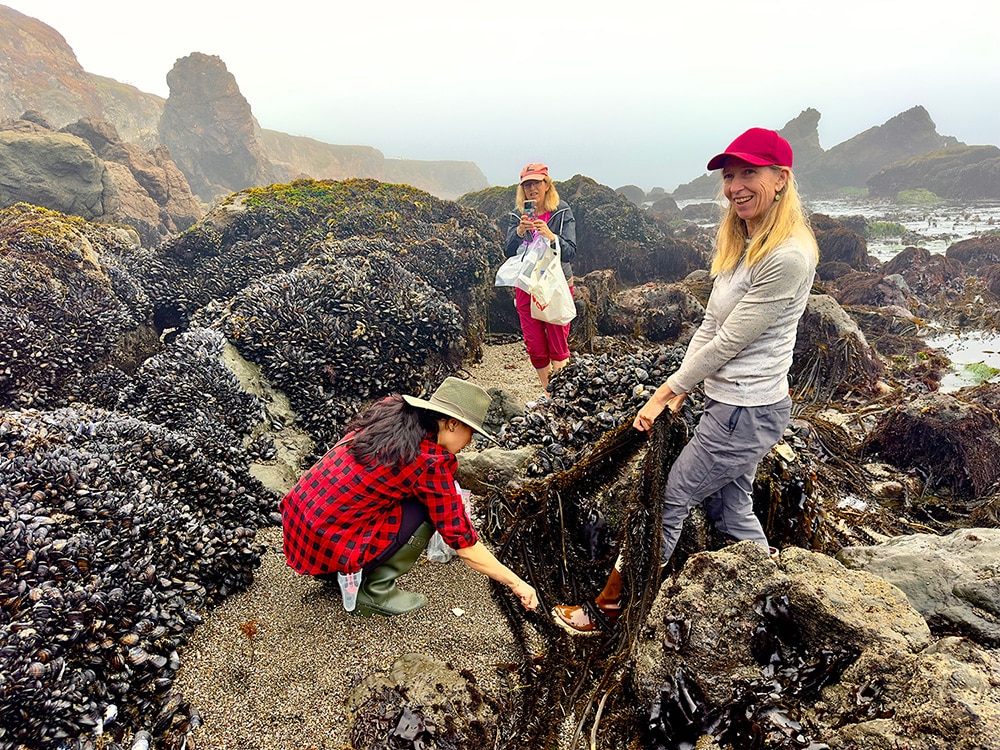
You May Also Like: Foraging Along California’s Coastal Edge
Sleeping beneath the towering giants in a redwood cabin in Northern California near the Avenue of the Giants is more than just a unique place to stay—it’s an experience that reconnects you to the slower rhythms of nature.
From forest bathing among ancient groves to exploring the wild, scenic Eel River and venturing out to the rugged Lost Coast, this region offers a rare kind of immersive travel that feels both grounding and unforgettable.
You may also like: my story on discovering coastal foraging and the deeper connection it brings to place.