Running Toward Lions: A Mokoro Canoe Journey Into Botswana’s Okavango Delta
“Lion!” Gabolyo’s shout splits the morning air just as his pole thuds deep into the shallow waters of the Okavango Delta. With one powerful push, he thrusts our narrow mokoro toward the muddy shore. Before I fully understand what’s happening, he leaps out—barefoot, agile, and alert—urging us with sharp hand gestures to follow.
I grab my camera and splash into the warm mud, heart rattling like a drum in my chest. My feet sink instantly. The air is thick with the scent of wet earth, reeds, and something else I can’t quite name—maybe adrenaline. From atop a low rise of a termite mound, we pause, trying to see what he sees.
“There,” I whisper, my breath catching. Two lionesses glide through the tall grass thirty yards ahead, their tawny bodies slipping into shadow like smoke. They move with a stealth so effortless that, for a moment, I’m unsure if I saw them at all.
But Gabolyo saw them. And now he is running.
Without thinking, we chase after him—three travelers armed with cameras and a guide armed only with instinct. It hits me mid-stride: we are running, on foot, unarmed, in the wilds of the Okavango Delta… in pursuit of lions.
How did we get here? And why does it feel both reckless and deeply, luminously alive?
Into the Heart of the Delta
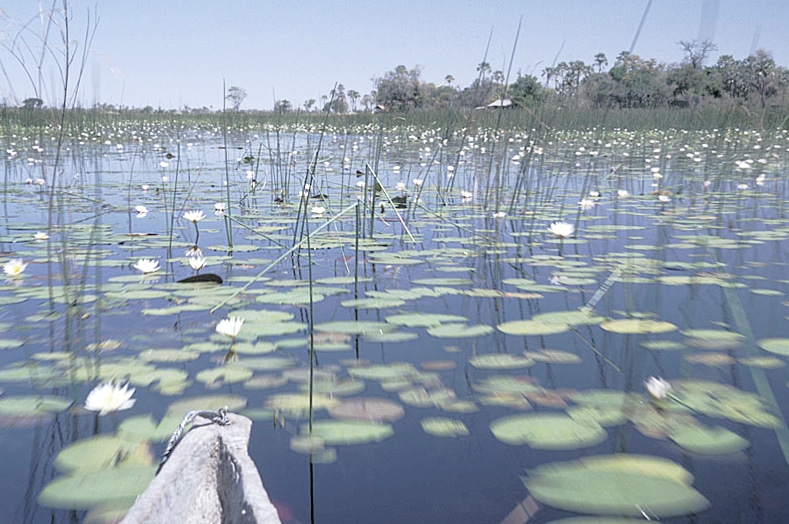
We are canoeing through Botswana’s Moremi Game Reserve, a place where the Okavango River—often described as “the river that never finds the sea”—spreads itself across the Kalahari sands and dissolves into a labyrinth of shallow channels, islands, and lush wetlands.
After two dusty, sun-scorched weeks camping in Namibia’s deserts, flying over the jewels of the Delta felt like descending into an emerald dream. From above, the landscape shimmered: threads of blue water winding through carpets of green, hippos carving pathways through reeds, elephants tracing ancient routes across flooded plains.
This trip—four women in search of wildness—gave us exactly what we asked for. But it also gave us what we never could have imagined.

Night Voices
The night before our lion chase, we sat around a small campfire on a remote island where we’d pitched our worn army tents. The darkness settled quickly, a thick, velvet black that felt heavier than night back home.
“Are you scared of lions?” Gabolyo asked in halting English, flicking sparks off a burning stick.
“No,” I said, far too quickly.
He laughed, shaking his head.
“You say no. Then we walk… and here is a lion.” He made a low growl, eyes gleaming. “You take a picture,”—he lifted an imaginary camera to his face—“and the lion will charge. Run, and the lion gets you. You listen. When we see a lion, we go far away to take pictures. Yes?”
The fire popped. Somewhere in the distance, a leopard coughed—a sound so deep it felt like it rose from the ground itself. Hyenas whooped. Lions grumbled. We were surrounded by voices in the dark, each one a reminder of our fragile place in this ecosystem.
“Tonight,” said Gabolyo, “stay quiet. Never leave your tents. If lions come into camp, you will know.”
The moon, a perfect harvest gold, rose behind the trees. Under the thin canvas of my tent, I lay awake listening to the sounds of animals moving through the night—a world alive around us, indifferent to our presence. Fear and awe twisted together until I couldn’t tell where one ended and the other began.

A Warning From Victor
A few days earlier, when we first arrived at base camp in the Delta, we were greeted by Victor, a soft-spoken South African with sunbaked skin and the watchful calm of someone who has lived close to danger.
“There are many things here that can kill you,” he said matter-of-factly as he welcomed us onto the shaded verandah. “Elephants will come into camp. Do not startle them. Leopards too—we saw one here last night.”
He spoke with the steady rhythm of a man who had given this talk many times.
“If you meet a cat on the trail—lion, leopard, cheetah—you stand still. They will become confused and leave. Never run. If you run, consider it your last run.”
We absorbed his list of threats like children memorizing rules: black mambas, puff adders, crocodiles, hippos. The sky dimmed to a bruised blue. The sounds of the Delta built around us—frogs, insects, the distant call of something unseen.
“But,” he added gently, “do not be afraid. Do not miss the beauty by watching only for danger. One woman came here for lions. She saw none. She saw nothing else either. She left blind.”
He looked out over the vast waters as if reminding himself of something.
“The way of life here is slow. If you can fall into its rhythm, you will understand more than you expect.”
Running With Lions
We run until the heat rises in shimmering waves around us. The grasses whisper against our legs. Sweat beads on my forehead. The lions have vanished—melted into the underbrush in that uncanny way predators do.
Suddenly, Gabolyo stops. I nearly crash into him. Without a word, he lifts his foot and plucks a long, needle-like thorn from the barefoot sole, completely unfazed.
“Gone,” he says finally, after scanning the veld one last time. I exhale, my heart slowing as reality catches up with adrenaline.
We walk back toward the mokoros, letting the Delta reveal itself as our pulses return to normal. Yellow weavers dance in the reeds, hornbills shriek overhead, and a troop of baboons watches us from the shade of a jackalberry tree.
A herd of impala flows like water through the tall grass, their cinnamon coats blending perfectly with the winter yellows. Zebras—skittish and uncertain—stamp, snort, and flee in a sudden thunder of hooves.
Wildness is everywhere, written in movement.
The Slow Drift
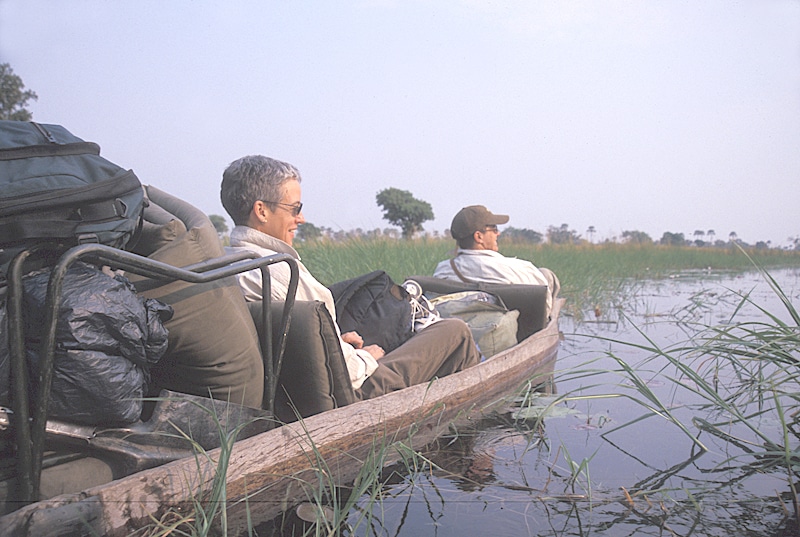
We return to the mokoros, pushing off into the quiet channel. The water is so clear I can see the patterns of reeds beneath the surface. This is a world built from water, wood, and patience.
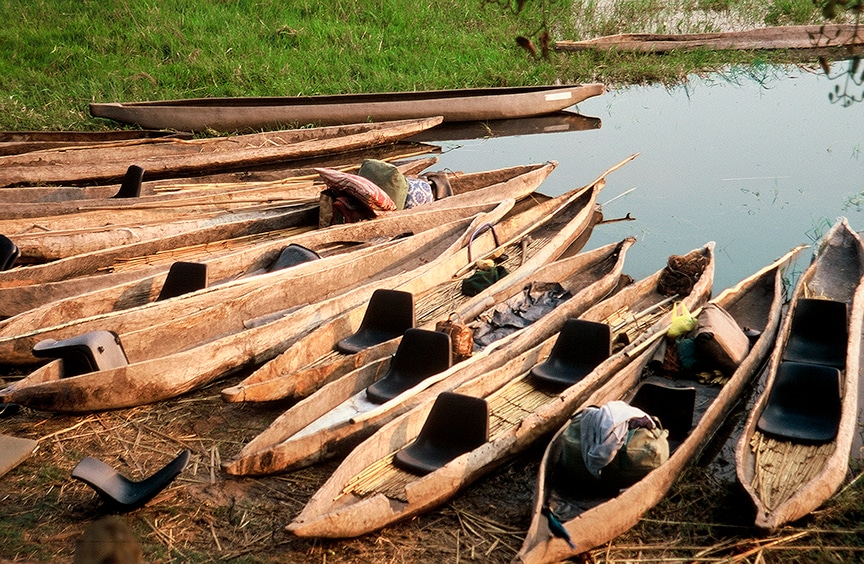
The mokoros—dugout canoes carved from African sausage trees—glide slowly, guided by the long poles of our polers. The rhythm is hypnotic.
Reeds rustle. Egrets stalk the shallows. A great blue heron lifts with deliberate grace. An African fish eagle spirals above us, its cry slicing through the heavy air.
I lean over the edge and scoop a cupful of cold Delta water. It tastes clean, sweet, even—filtered naturally through hundreds of miles of papyrus and river grasses.
Victor had told us it was safe.
“No bilharzia here,” he said proudly. “This water is alive.”

Swim at Your Own Risk
When the sun burns through the morning clouds, our guides steer us toward a grassy bank.
“You swim now,” Gabolyo announces.
We glance at each other.
“Here?”
“Yes, here. Is OK.”
I recall a warning I’d read:
“Be the last one in, first one out. If a crocodile appears, go for the eyes. And never go anywhere near a hippo. Good luck.”
But the heat is punishing, and the water looks divine. One by one, laughing nervously, we plunge in. The chill hits like a blessing. The thrill of potential danger lingers, electrifying the moment.
Later, back at camp, it will become our favorite story.
Nightfall, Again
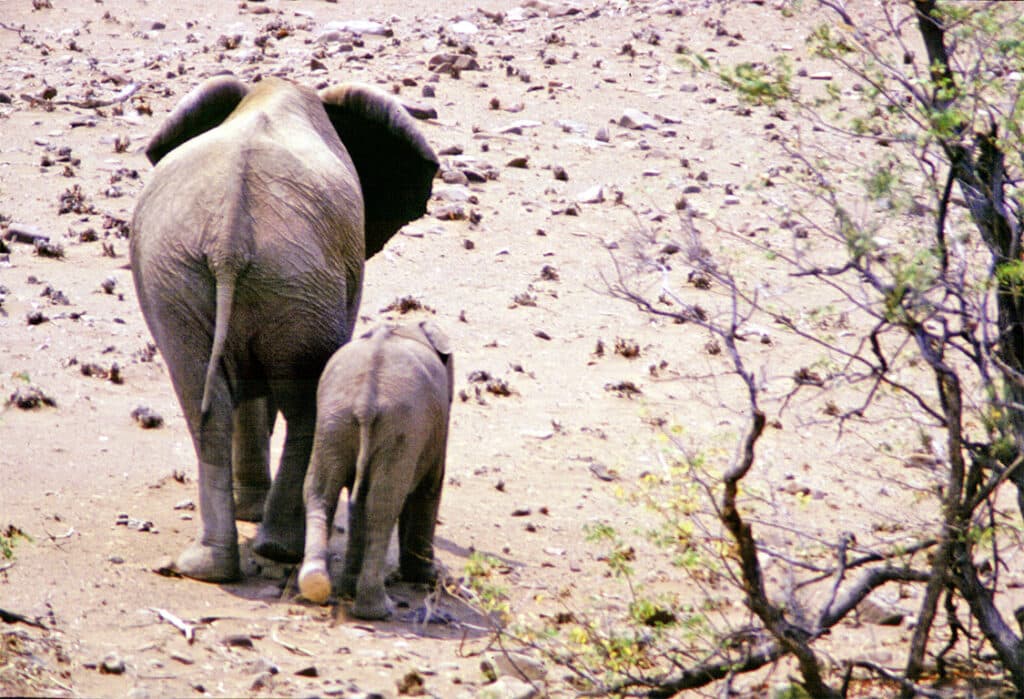
As evening settles over our little island, the world shifts color. Blues seep from the sky like watercolor bleeding into paper. A bull elephant materializes out of the dusk, enormous and silent, ambling past our tents with the slow certainty of a creature who belongs here in ways we never will.
His musky scent hangs in the air long after he disappears.
The frogs begin their croaking chorus. Guinea fowl fuss in the brush. Across the water, zebras and tsessebe inch toward the bank, wary in the deepening shadows.
Fruit bats weave erratically overhead, their wings whispering through the branches. Lightning flickers in the distance, illuminating the horizon in jagged strokes.
The Delta breathes. And I feel intensely, profoundly aware of my smallness.
This Wild Farm
On our last night at base camp, we find Victor again on the verandah, gazing across the darkening water.
“I came here five years ago,” he says quietly when I sit beside him. “I lost my farm in Pretoria. Had to take my family and leave. Hardest time of my life.”
He pauses, then gestures to the vast expanse before us—the reeds, the channels, the luminous sky.
“This,” he says simply, “is my farm now.”
I look out across the wilderness, feeling the pulse of the place—the slow rhythm, the ancient balance, the truth of wildness that demands humility.
Yes, I think.
It’s all of ours if we’re willing to slow down, listen, and let the land speak.